
Why International Compliance Is Becoming a Competitive Advantage for Businesses
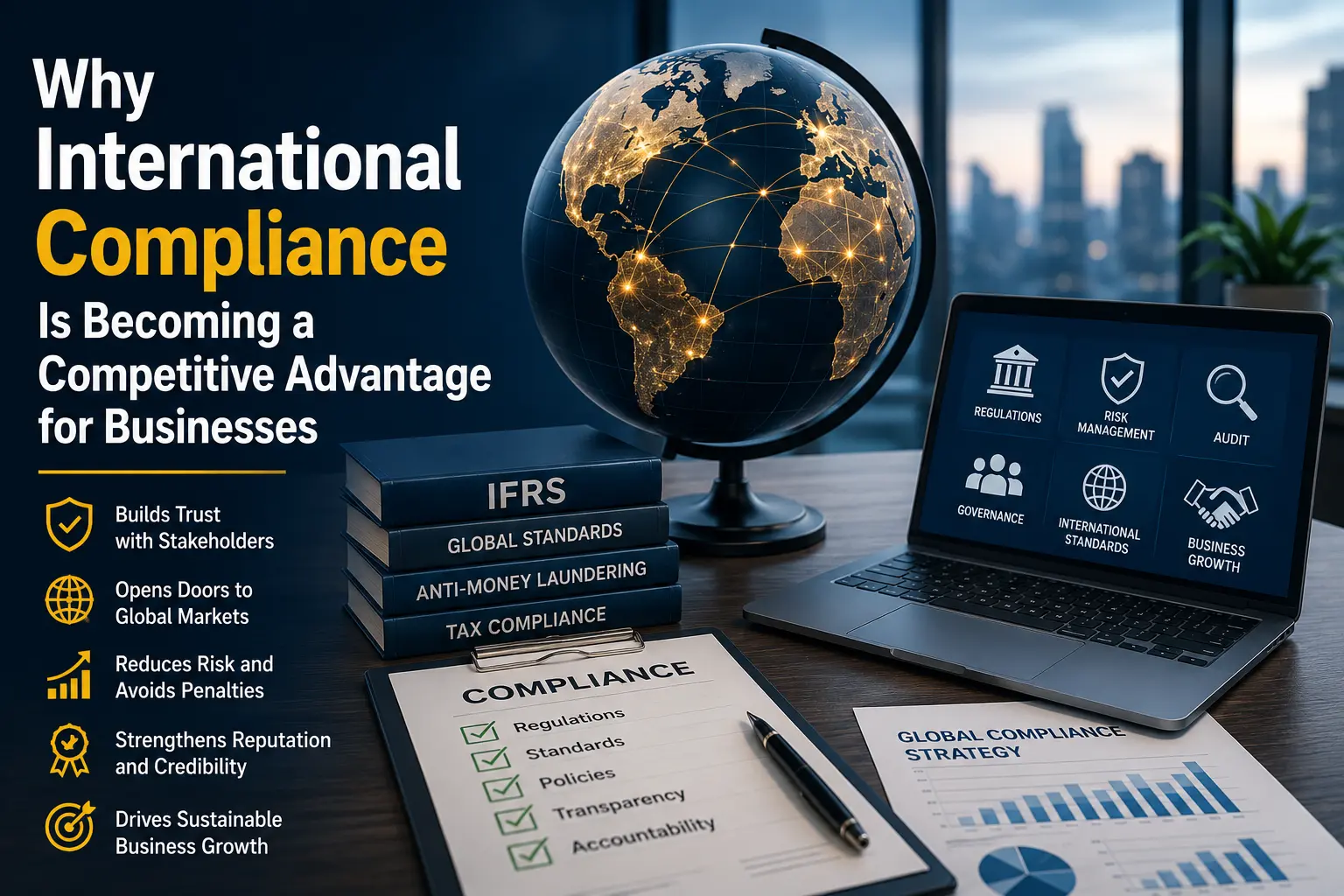
Why International Compliance Is Becoming a Competitive Advantage for Businesses
In today’s connected economy, businesses are no longer competing only within their own country. Whether you export products, provide services overseas, work with foreign investors, or use international payment platforms, your business is increasingly expected to meet global compliance standards.
International compliance is not simply about avoiding penalties, it’s about building trust.
What Does International Compliance Mean?
International compliance refers to operating your business in line with globally accepted laws, regulations, and professional standards. Depending on your industry and location, this may include:
Why It Matters
Businesses with strong compliance frameworks are more likely to:
In many cases, international clients now assess a company’s governance and compliance practices before signing commercial agreements.
Practical Steps Every Business Can Take
You do not need to be a multinational corporation to adopt international best practices. Start by:
Small improvements today can prevent significant challenges tomorrow.
The ARTISAN Perspective
At ARTISAN Chartered Accountants, we believe compliance should be viewed as a business asset rather than a regulatory burden. A well-governed business is more resilient, more attractive to investors, and better positioned for sustainable growth.
As global expectations continue to evolve, organizations that embrace international standards today will be better prepared for tomorrow’s opportunities.